Mini Bag (0)
X
your bag is empty, time to go shopping!
Registered with us, but, you can't see your items? Sign in to see your bag and get shopping!
Continue Shopping
Sign In




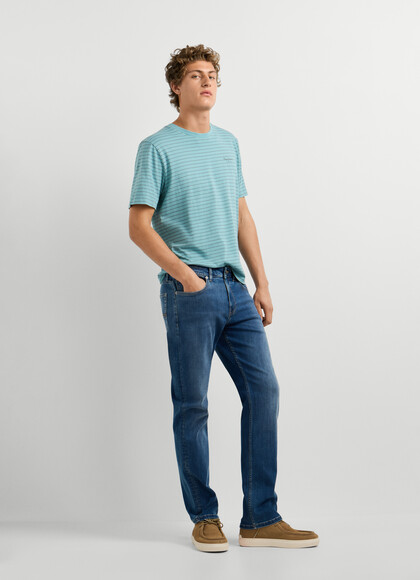
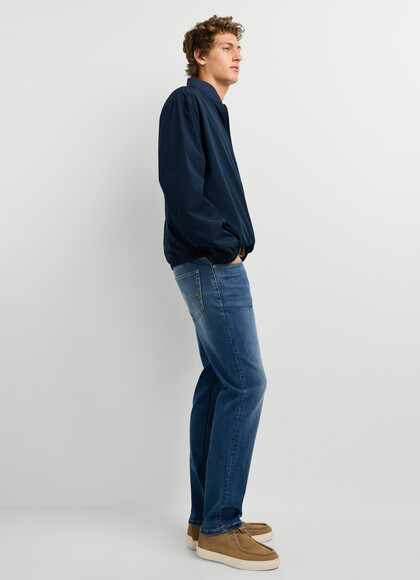







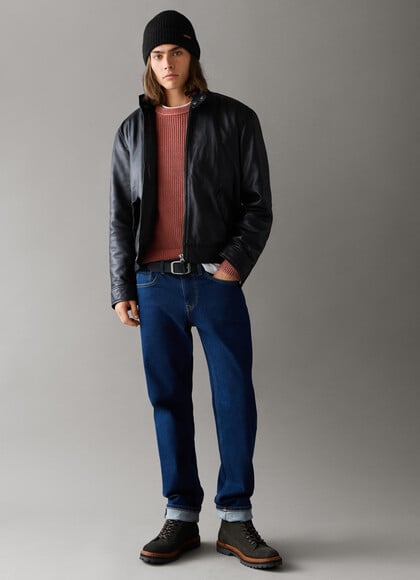
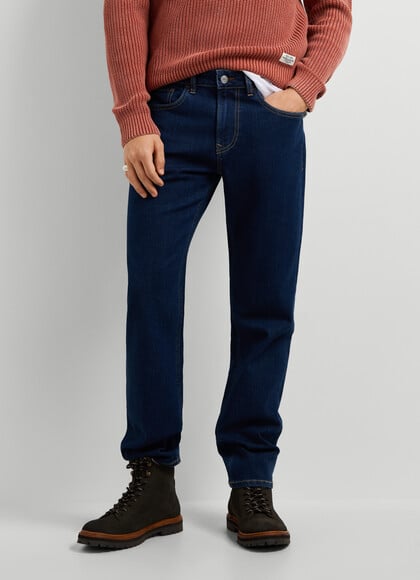


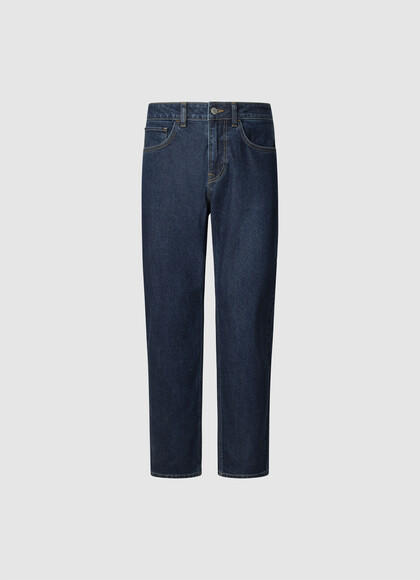


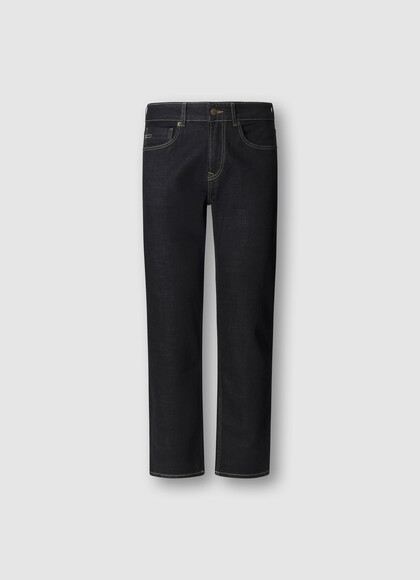
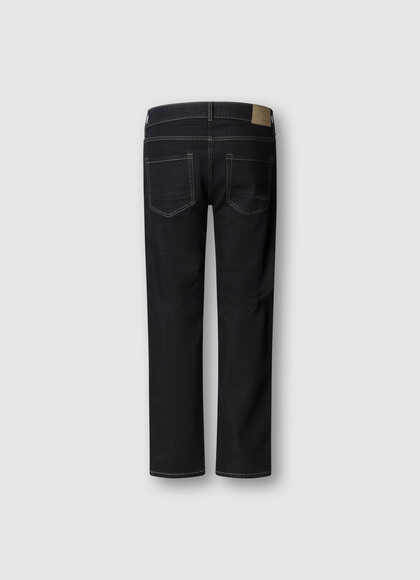
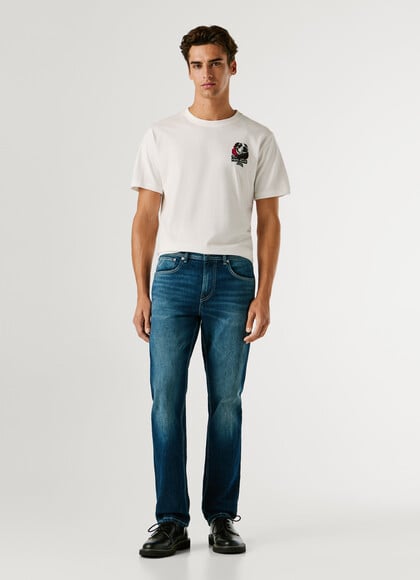


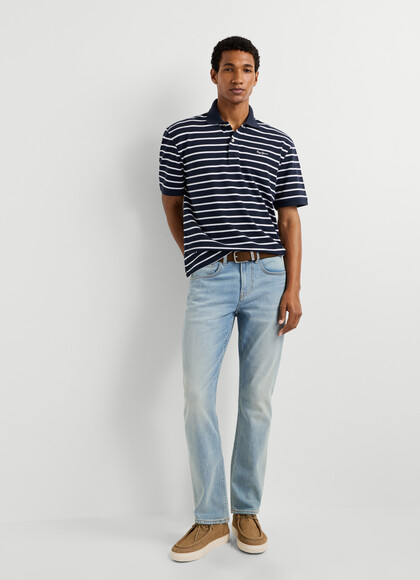
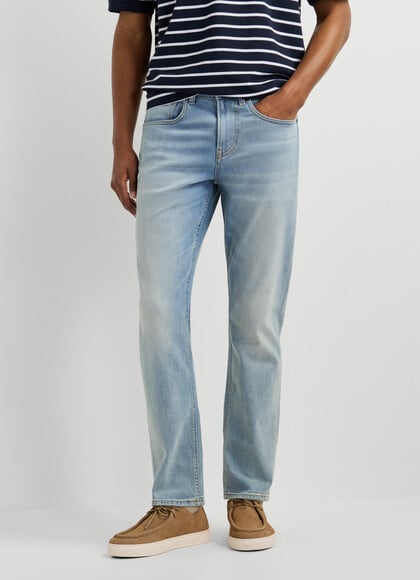
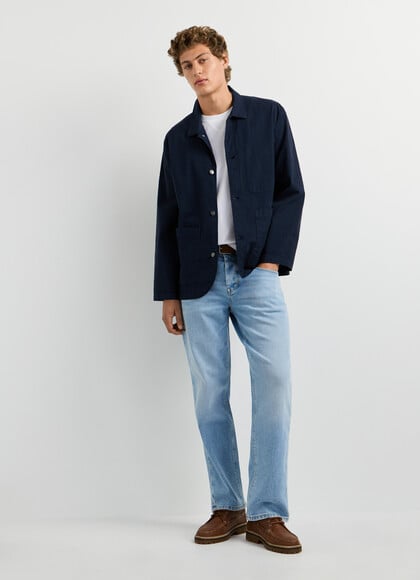
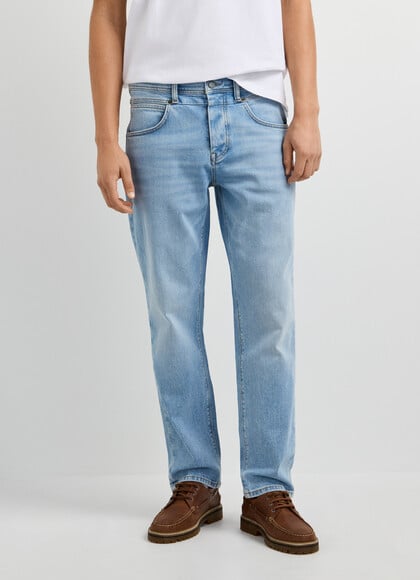
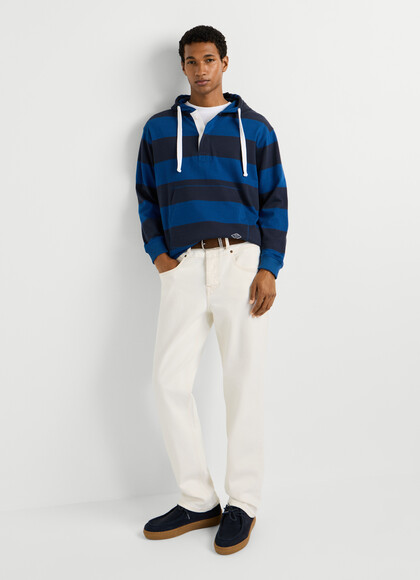
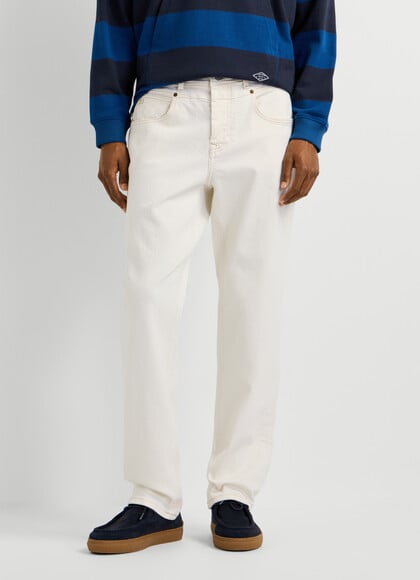






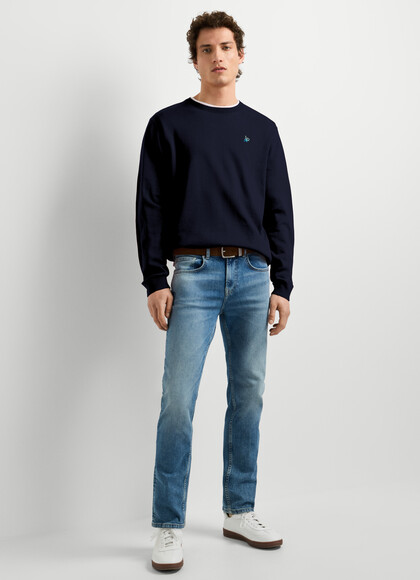
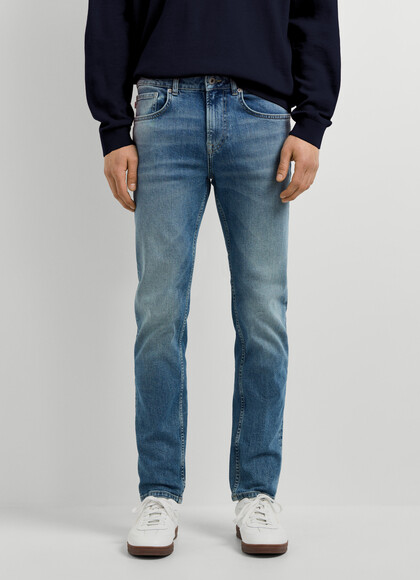


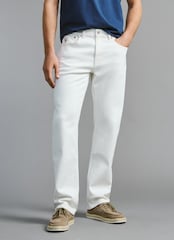
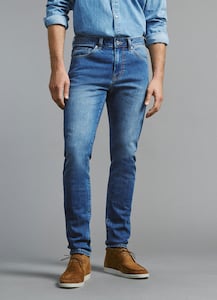
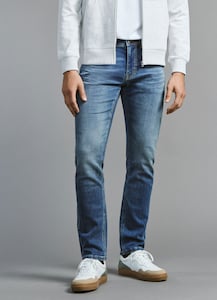
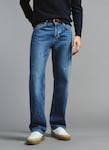
Men's straight jeans are the cut that holds the whole wardrobe together — and this collection brings together every wash, weight and finish Pepe Jeans London has refined since 1973 into one focused, no-compromise selection.
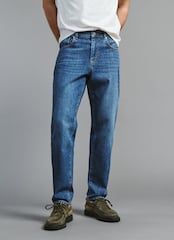
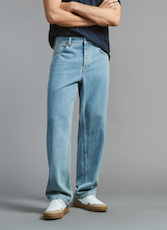
Men's straight jeans are defined by a consistent leg opening from hip to hem — no taper, no flare, just a clean vertical line that works with almost any silhouette. The straight-leg fit sits at the intersection of relaxed and structured: enough room through the thigh to move freely, enough precision in the leg channel to look intentional rather than oversized. It is the cut that does not ask for anything specific from the rest of the outfit, which is exactly what makes it useful.
Across this range, the men's straight jeans are built on a mid-rise waistband — typically sitting two to three centimetres below the natural waist — which keeps the proportion balanced without pulling the eye downward. The construction follows Pepe Jeans London's long-standing approach to denim architecture: reinforced belt loops, five-pocket configuration, and bartack stitching at the points of highest stress, so the garment holds its shape through years of heavy rotation.
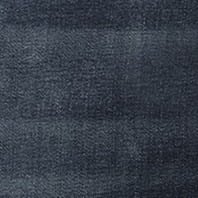
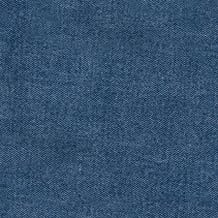
The denim used across these straight-fit jeans for men ranges from rigid cotton canvas — a tightly woven, 100% cotton structure with a firm hand feel and a slow break-in that rewards patience — through to stretch compositions running around 98% cotton and 2% elastane, designed for commuters and longer wear days. The rigid options carry more visual texture: the weft threads catch light differently, the selvedge-inspired finishes age with character. The stretch constructions prioritise consistent silhouette throughout the day, with a recovery rate that prevents bagging at the knee after the first hour.
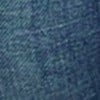
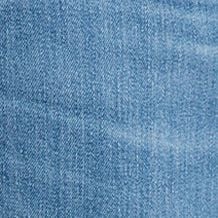
Wash options span the full spectrum. Deep indigo with minimal processing gives a clean, almost formal register — the wash that transitions most naturally from a morning meeting to an evening out without changing the overall tone. Mid-blue stonewash with subtle whiskers on the thigh adds surface movement and a lived-in quality that reads well in casual contexts. Heavily faded options with contrast thread and worn edges carry a more expressive personality, best paired with clean, minimal tops to let the denim itself carry the weight of the look.
The straight-leg construction suits most builds, but the details shift depending on fit. For a longer leg, a full-length hem that grazes the top of the shoe creates the cleanest line. For a shorter frame, the same men's straight jeans worn with a slight break or cropped to the ankle — a single, clean turn-up — keeps the proportion from stacking. Through the thigh, the straight cut offers more room than a slim but less volume than a relaxed fit, making it the natural midpoint for anyone moving between both.
Two looks that work across the range:
— Deep indigo straight jeans with a structured overshirt in cotton twill, leather loafers and a minimal watch: the kind of outfit that works from morning to evening without announcing itself.
— Faded mid-blue straight jeans with a heavyweight graphic tee, a washed canvas jacket and low-profile trainers: the looser layers balance the straight leg and keep the whole thing grounded.
The straight jeans in this range carry a set of finishing details that separate them from generic denim: tonal contrast stitching on the back yoke, a leather patch at the waistband rear, and in several models a coin pocket with riveted corners that date back to Pepe Jeans London's original workwear references from the early 1970s. The hem is clean-cut on most styles, left with a subtle raw edge on the more expressive washes — a tactile detail that becomes more visible as the fabric relaxes over time and the cotton threads begin to fray in a controlled, deliberate way.
Straight jeans maintain a consistent leg width from the thigh to the hem, while slim jeans taper progressively toward the ankle. The practical difference is most visible from the knee down: a straight leg sits away from the calf and shin, creating a vertical line that reads as more relaxed and easier to wear with chunky footwear. Slim jeans hug the lower leg more closely, which works well with low-profile trainers or sleek boots but can feel restrictive with heavier soles.
Yes — the straight leg is one of the most boot-compatible cuts in denim. The consistent leg opening accommodates both Chelsea boots worn underneath and chunkier lug-sole styles worn outside the hem without bunching. For taller boots, a clean single turn-up exposes the shaft and keeps the overall silhouette intentional rather than accidental.
The waistband should sit comfortably without requiring a belt to stay in place — if you need a belt to hold the jeans up, size down. Through the thigh, there should be enough room to sit and move without tension, but not so much that the fabric folds horizontally across the leg when standing. The straight-leg channel below the knee should fall cleanly without stacking excessively on the shoe.
Wash inside out at 30 degrees to preserve both the colour and the structural integrity of the cotton weave. Avoid tumble drying on high heat, which accelerates shrinkage in the length and can distort the leg channel over time. Air drying flat or hanging from the waistband keeps the hem straight and prevents the leg seam from twisting — a common issue with denim washed and dried incorrectly more than once.