Mini Bag (0)
X
your bag is empty, time to go shopping!
Registered with us, but, you can't see your items? Sign in to see your bag and get shopping!
Continue Shopping
Sign In
Black jeans for men define the sharpest overlap between denim and a wardrobe that works from morning to evening without asking anything extra from the person wearing them.
There is a reason men's black jeans outlast trends in a way that coloured denim never quite manages. The construction starts at the fabric level: most cuts in this range use a mid-weight rigid cotton canvas or a blended denim — typically 98% cotton with 2% elastane in the stretch options — treated with a sulphur-dye process that builds depth into the black rather than sitting flat on the surface. That depth is visible in movement, when the fabric catches light differently across the thigh and knee, and it is what separates a well-made black jean from a pair that reads as workwear.
Pepe Jeans London has been working denim since 1973, and the approach to black finishes reflects that accumulated expertise: the rinse blacks hold their tone through repeated washing far longer than fashion-cycle alternatives, and the faded or worn-through options use controlled abrasion on real stress points — the thigh, the back pocket edges, the knee — rather than uniform bleach patterns applied mechanically.
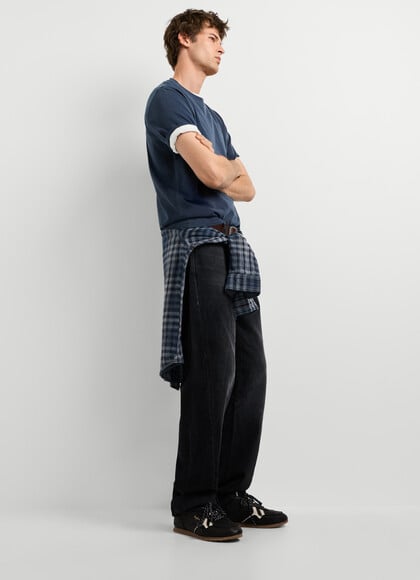
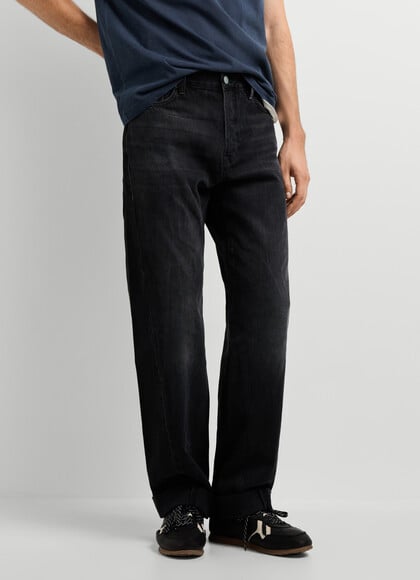
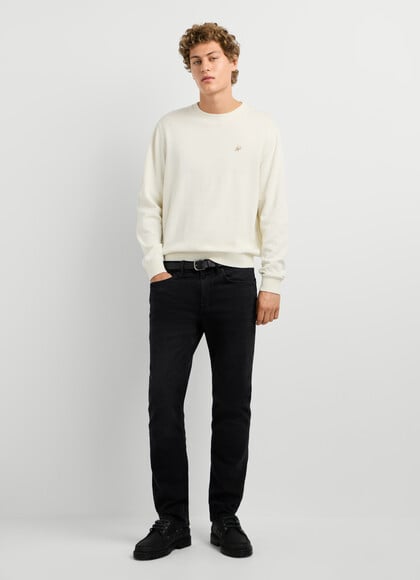
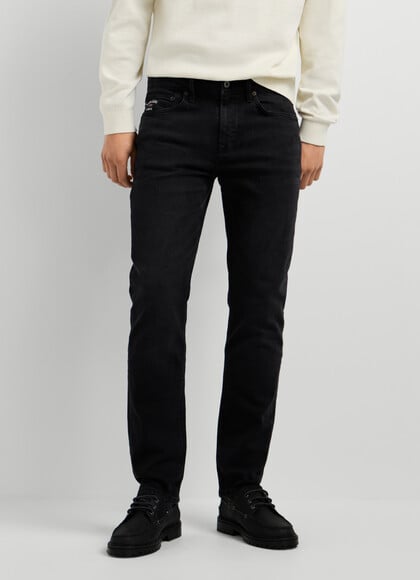
The range covers the full spectrum of black jeans for men in terms of silhouette. The slim fits — constructed with a tapered leg from the knee down and a mid-rise waistband — sit at the most versatile end of the offering, reading as smart without effort. The skinny options compress the leg profile further, with the stretch composition playing a functional role: the elastane calibration in those cuts is designed for high recovery, meaning the fabric returns to its original shape after a full day of movement without bagging at the knee or seat. At the other end, the relaxed and straight-leg fits use a heavier canvas construction that carries structure independently of the body, falling clean from hip to hem.
The tapered black denim cuts sit between those poles and are arguably the most current silhouette in the range — enough width through the thigh to avoid the clinical precision of a skinny, narrow enough at the ankle to work cleanly over a boot or under a coat hem.
The real utility of men's black jeans is the range they cover without needing a change of trousers. Two directions that illustrate the point:
— Slim-fit black denim paired with a structured cotton shirt in off-white and leather Chelsea boots: the monochromatic base does the work, the shirt provides contrast, and the overall register sits comfortably at a dinner or a presentation without reading as overdressed.
— Relaxed straight-leg black jeans with a heavyweight washed sweatshirt and low-profile leather trainers: the volume balance between a looser upper and a clean-falling trouser leg is the proportion that defines most well-considered casual dressing right now.
The depth of the black rinse — particularly in the darker, less faded options — is what makes the difference in more elevated contexts. A pair of black denim trousers for men in a deep rinse reads differently under artificial evening light than it does in daylight, and that shift is built into the fabric rather than achieved with an iron.
Fit selection in men's black jeans follows straightforward logic. If the goal is visual length — elongating the leg line — the slim or skinny fits with a mid-rise waistband do that most efficiently, especially in a deep rinse that minimises contrast. Taller builds with a longer inseam tend to work best in straight or relaxed cuts where the fabric has enough length to fall without the leg opening looking compressed. Mid-builds with a standard inseam have the most flexibility: the tapered fit is typically the most proportionate choice because the taper begins at the natural widest point of the thigh and follows the body's line rather than fighting it.
Black jeans are constructed from denim — a twill-woven fabric with sulphur or reactive dye — which gives them a visible texture, a heavier hand feel and a casual register even in slim or dark-rinse versions. Black chinos use a smoother cotton twill or cotton-blend fabric without the characteristic denim weave, which reads as more formal. For a wardrobe that covers both casual and smart-casual contexts with fewer pieces, the dark-rinse black jean covers more ground.
The rate of fading depends directly on wash technique. Washing black denim inside out at 30 degrees or below, on a short cycle, significantly slows colour loss. The sulphur-dye process used in the darker rinses builds more pigment into the fibre than surface-applied dyes, which means the fade is gradual and even rather than patchy. Air drying away from direct sunlight preserves the rinse longer than tumble drying.
The waistband should sit flat without needing a belt to hold it in place, with no more than two fingers of ease. In stretch cuts — those using a 2% elastane blend — the waistband has a degree of give that makes sizing down one number viable if you are between sizes and want the slim silhouette to track closer to the body. In rigid canvas constructions, size to your actual waist measurement, as there is no recovery in the fabric.
In most contemporary workplaces, a deep-rinse black jean for men in a slim or tapered cut reads as smart-casual without issue. The key variables are the rinse — darker is always more formal — and the upper: a structured blazer or a fine-knit wool jumper shifts the register upward decisively. The detail that matters most at the hem is avoiding visible wear or fading at the knee, which signals casualness regardless of how the rest of the outfit is assembled.