Mini Bag (0)
X
your bag is empty, time to go shopping!
Registered with us, but, you can't see your items? Sign in to see your bag and get shopping!
Continue Shopping
Sign In
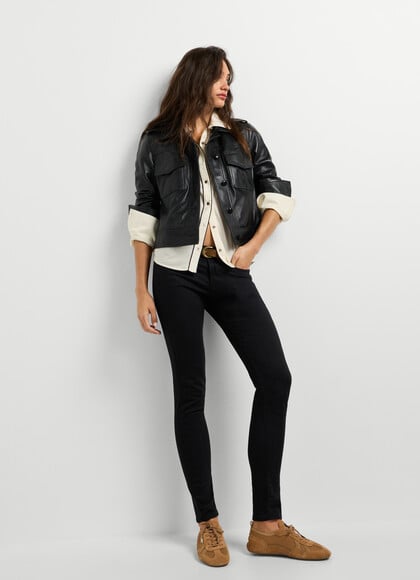
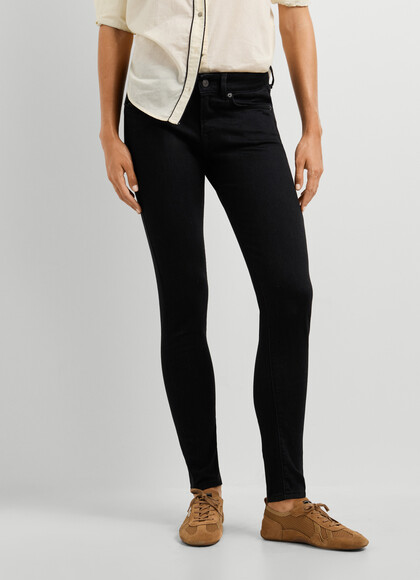

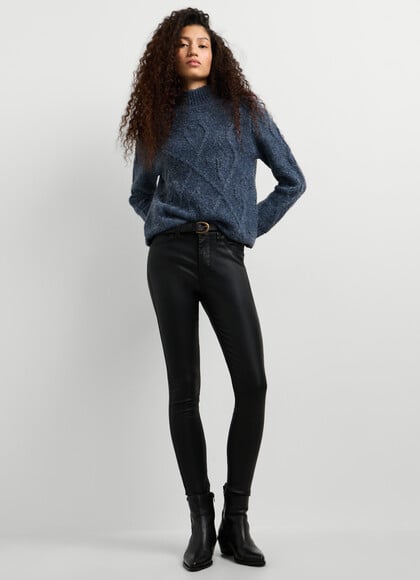
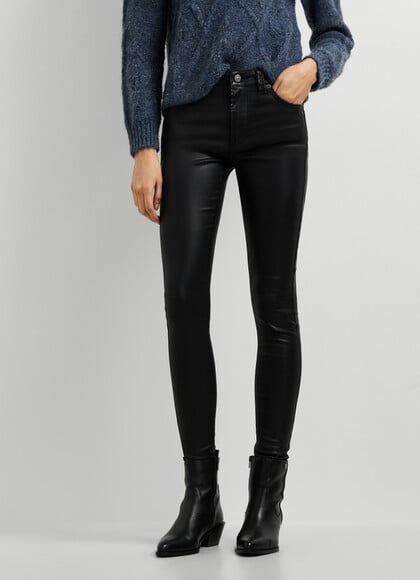
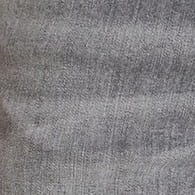

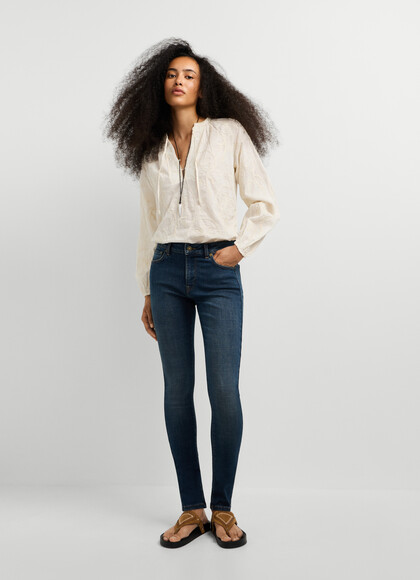
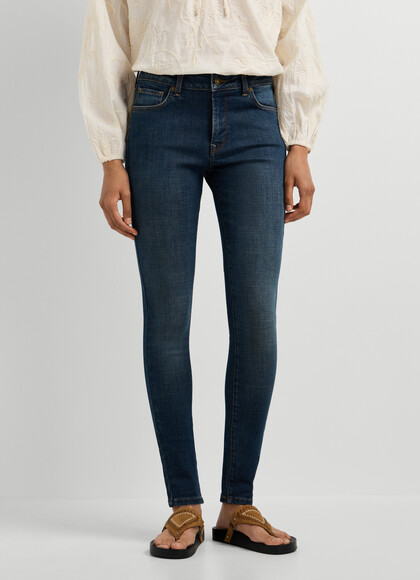



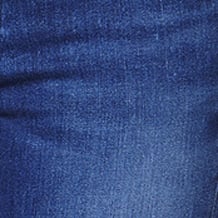



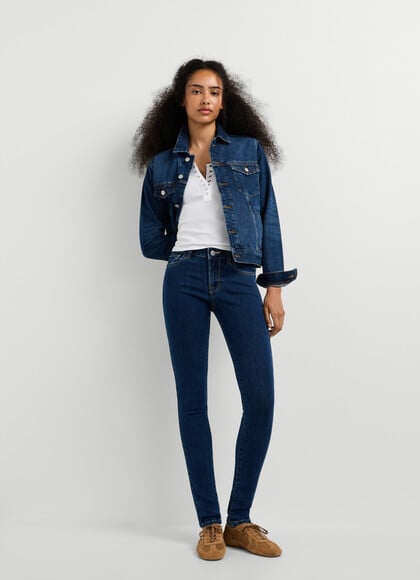
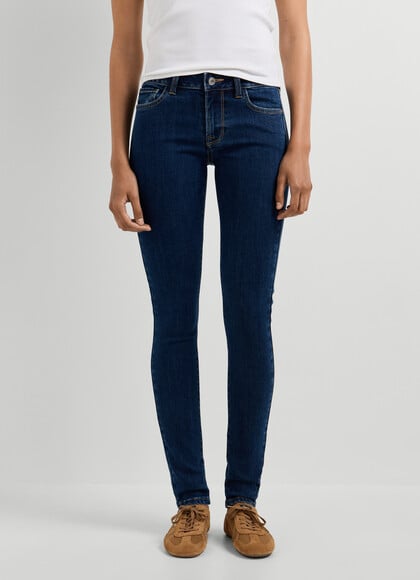




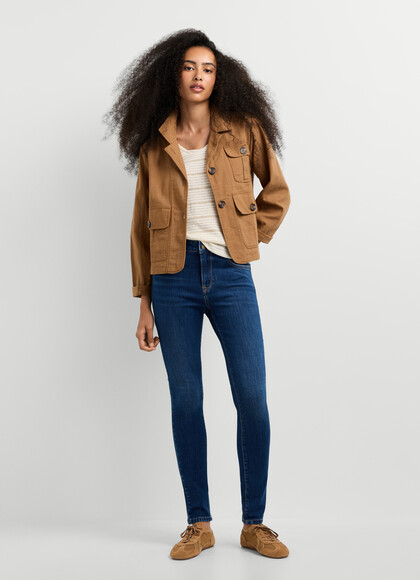
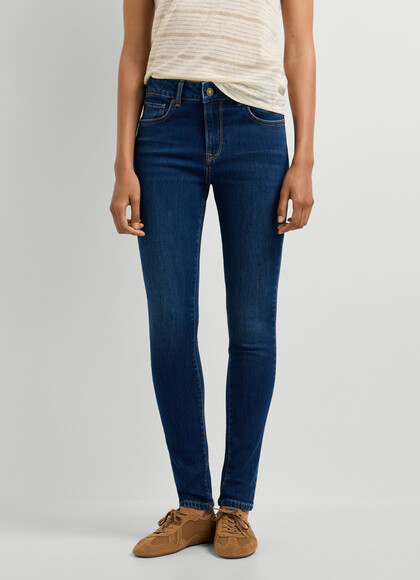


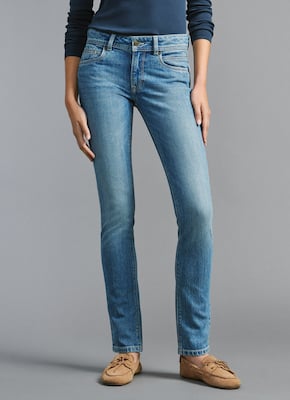
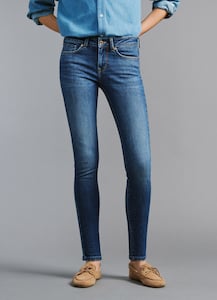
Women skinny jeans are the most form-fitting cut in the denim wardrobe — a second-skin silhouette that follows the body closely from waist to ankle, with a close ankle opening that works with almost every shoe in the wardrobe. This collection brings together the Pepe Jeans London range of skinny fits for women: different rises, different washes, each built from a cotton-stretch canvas with enough elastane to move comfortably without the cut ever losing its defining closeness.
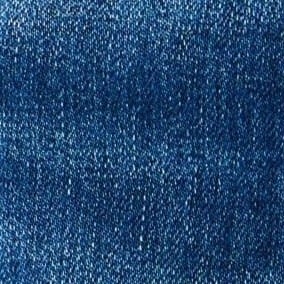
The women skinny jeans silhouette is the most demanding cut in the range in terms of fabric performance. Where a slim or straight fit can be cut from a denser, less stretchy canvas without restricting movement, a skinny fit requires a stretch denim that moves with the body naturally — sitting, walking, cycling across Brussels on a November morning — without pulling across the thigh or knee. The cotton-stretch canvas used across the Pepe Jeans London skinny range typically combines 95–98% cotton with 2–5% elastane, calibrated to give the cut its second-skin fit while maintaining enough surface tension to hold the colour and structure of the denim over time.
The women skinny jeans hold their shape through a full day of wear without the elastane content causing the fabric to sag at the knee or seat — which is the functional failure point of poorly constructed stretch denim. The weave is dense enough to resist that sagging while remaining supple enough for the skinny silhouette to work in motion, not just standing still.
The women skinny jeans range is available across multiple rises, each of which changes the proportional logic of the skinny silhouette. A high rise skinny jean is the most structured option — the waistband sits above the natural waist, the skinny leg extends that line all the way to the ankle, and the overall effect is the most defined, elongated silhouette available in the collection. A mid rise skinny jean is more relaxed in its approach: the waistband sits at the hip, the body-skimming leg follows below, and the cut works with a wider range of tops without requiring as deliberate an approach to what sits above the waistband.
In terms of wash, a dark indigo women skinny jean reads almost as a tailored trouser from a distance — the close fit and the depth of colour together create a formality that no other denim cut achieves as convincingly. A mid-blue rinse or stonewash version of the same skinny cut reads entirely differently: casual, accessible, the kind of jean you reach for without thinking on a long weekend in Ghent or Antwerp.
In dark indigo, women skinny jeans pair with a fine-knit oversized jumper worn loose, a structured leather belt at the waist and Chelsea boots with a slight heel. The volume of the jumper contrasts with the close leg below — a proportion that works precisely because the skinny fit anchors everything above it. A combination that holds from a working week in Brussels through to the weekend without any adjustment.
In a mid-blue or stonewash finish, women skinny jeans work with a fitted ribbed long-sleeve top, a canvas tote and clean white trainers with a low profile. The close leg and the fitted top create a consistent, body-skimming silhouette from shoulder to ankle — simple, considered, and easier to wear than it looks. The kind of outfit that goes on quickly on a busy morning in Ghent and holds up all day without thought.
The women skinny jeans collection is sized in waist-to-length inch measurements. The cotton-elastane blend offers more give than a rigid canvas — but the skinny fit is designed to sit close throughout, so if you are between sizes, the better call depends on where you carry more volume: size up at the waist if the waistband is the priority; check the thigh measurement on the product page if that is the critical fit point. Leg length can always be adjusted by a tailor. Individual product pages provide exact measurements and elastane percentages for each style.
Yes — the skinny jean has never fully left the wardrobe; it has simply stopped being the default. It works best as a deliberate silhouette choice rather than the path of least resistance, which is precisely how it should be worn. For those who know the cut works for their body and their wardrobe, the skinny remains one of the most versatile and shoe-compatible fits in the denim range.
The skinny fit works best for those who are comfortable with a close-fitting silhouette across the entire leg. It suits slimmer and athletic frames most naturally, but works across a wider range of body types when the rise is chosen carefully — a high rise skinny adds waist definition and lengthens the leg; a mid rise is more forgiving through the hip. The key is getting the thigh fit right: enough stretch to move without pulling, close enough to maintain the defining silhouette of the cut.
The close ankle opening of the skinny is the most shoe-compatible leg finish in the denim range — it works with ankle boots, pointed flats, trainers, heeled mules and over-the-knee boots without any of the hem-length issues that wider leg openings create. The skinny tucks cleanly into tall boots; it sits neatly above the ankle with low footwear. Almost any shoe works; the choice is about the overall proportion rather than the fit at the hem.
The elastane content across the women skinny jeans range typically runs from 2% to 5%, depending on the style — higher than the slim or straight fits in the collection, which usually sit at 1–2%. The higher elastane percentage is what allows the skinny silhouette to move comfortably without the fabric pulling across the thigh or knee. Exact fabric composition is listed on each individual product page.